Brown Sugar Font: A Practical Evaluation for Designers
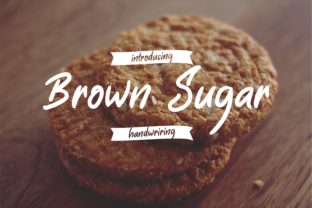
Brown Sugar is a handwritten typeface designed to balance personality with clarity. Unlike many script fonts that prioritize decorative flair over function, Brown Sugar emphasizes readability while retaining the warmth and rhythm of natural handwriting. It is not a digitized scan of pen-on-paper, but a carefully crafted digital font—engineered for consistent spacing, balanced weight distribution, and legibility across sizes and mediums.
Designers often seek handwritten fonts when aiming to convey approachability, authenticity, or contemporary elegance. Brown Sugar fits within this category, but its distinguishing trait is restraint: it avoids excessive flourishes, tight letter connections, or exaggerated swashes. This makes it more versatile than highly stylized scripts—particularly in contexts where tone matters as much as aesthetics.
Why Consider Brown Sugar?
Several practical needs drive interest in Brown Sugar:
- Readability at smaller sizes: Its open counters, generous x-height, and moderate contrast allow it to remain legible in body text applications like pull quotes or magazine sidebars—uncommon for most handwritten fonts.
- Modern visual identity: It supports branding efforts that aim for freshness without sacrificing professionalism—think lifestyle brands, boutique studios, or editorial projects seeking a refined yet human touch.
- Layout flexibility: Because its letterforms avoid extreme variations in stroke width or connection points, it pairs predictably with sans-serif or geometric typefaces in mixed-typography layouts.
- Print and screen compatibility: Brown Sugar renders consistently across devices and printing methods, with no reliance on OpenType features that may not activate in all environments.
Benefits and Realistic Expectations
The primary benefit of Brown Sugar lies in its functional duality: it reads like a well-designed text face but feels hand-drawn. This makes it effective for short-form emphasis—logos, headlines, poster titles, or social media graphics—without overwhelming surrounding content.
However, expectations must align with its scope. Brown Sugar is not intended for long-form reading (e.g., full articles or book chapters). It lacks extensive language support beyond basic Latin characters and does not include alternate glyphs, stylistic sets, or multilingual diacritics. Users requiring Cyrillic, Greek, or extended accented characters will need supplemental fonts or custom solutions.
Its licensing model also warrants attention. Brown Sugar is typically distributed under a desktop + web license, meaning usage in embedded applications (e.g., mobile apps or software UIs) may require additional permissions. Always verify license terms before committing to a project with broad distribution requirements.
When Brown Sugar Is a Strong Fit
Brown Sugar excels in scenarios where tone and clarity intersect:
- Editorial design: Magazine covers, feature headers, or pull quotes where a human voice enhances narrative without competing with dense text blocks.
- Branding systems: Logos or wordmarks for creative studios, wellness services, or artisanal products—especially when paired with clean, neutral supporting type.
- Promotional materials: Posters, event invitations, or email headers where visual distinction matters, but legibility cannot be compromised.
- Digital interfaces: Web banners, hero sections, or CMS-driven quote modules where CSS
@font-faceloading is reliable and fallback behavior is well tested.
In these cases, Brown Sugar contributes character without demanding special technical handling or compromising accessibility standards—provided color contrast and sizing meet WCAG guidelines.
When Alternatives May Be More Suitable
Not every project benefits from Brown Sugar’s specific profile. Consider alternatives if:
- You need multilingual support: Fonts like Quicksand (a rounded sans-serif with similar warmth) or Playfair Display (a high-contrast serif with strong personality) offer broader language coverage and OpenType features out of the box.
- Your use case involves dynamic text generation: For applications like name badges, certificates, or user-generated content, a more robust script with ligature support and variable weights—such as Great Vibes or Parisienne—may provide greater typographic control.
- You prioritize strict accessibility compliance: While Brown Sugar is readable, its handwritten nature introduces subtle irregularities that may challenge users relying on screen readers or those with certain visual processing preferences. In such cases, pairing it with a highly legible sans-serif for body copy—and using it only for non-essential headings—is advisable.
- You require variable font capabilities: Brown Sugar is a static font family. If responsive typography—where weight, width, or slant adjusts fluidly with viewport size—is essential, explore variable fonts like Inter Variable or Recursive, even if they lack the same expressive quality.
Making an Informed Decision
Evaluating Brown Sugar begins with clarifying your project’s core constraints and goals. Ask yourself:
- What role will the font play? If it’s strictly for display (e.g., a logo or headline), Brown Sugar’s strengths are fully leveraged. If it must carry semantic weight in UI labels or data tables, reconsider.
- Who is the audience—and how will they interact with the text? A fashion brand targeting younger audiences may benefit from its modern informality; a government health campaign likely requires higher neutrality and broader accessibility assurance.
- What technical environment will host it? Test Brown Sugar in your target browsers and devices. Check rendering consistency, especially at 16–24px sizes. Verify fallback behavior in CSS stacks.
- Does your workflow support font management? If your team uses shared design systems or component libraries, ensure Brown Sugar’s licensing permits redistribution and that file size (typically under 100 KB) aligns with performance budgets.
Finally, compare Brown Sugar alongside two to three alternatives—not just by appearance, but by how each performs in your actual layout. Mock up real content: a headline with body copy, a logo with tagline, a responsive banner. Observe hierarchy, rhythm, and contrast. A font’s value emerges not in isolation, but in relationship to what surrounds it.
Ultimately, Brown Sugar is neither universally ideal nor inherently limited—it is a tool shaped by deliberate design choices. Its usefulness depends less on trend alignment and more on whether its balance of warmth and clarity serves your specific communicative intent. When matched thoughtfully to context, audience, and execution, it remains a pragmatic choice among contemporary handwritten fonts.