Roam: The Handwritten Display Font That Makes Headlines Pop
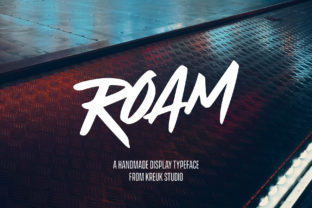
If you've ever stared at a blank poster, a dull logo mockup, or a flat social media graphic wondering how to inject instant energy and personality — Roam might be the quiet solution you’ve been overlooking. It’s not another minimalist sans-serif or a delicate script meant for wedding invites. Roam is a bold, thick-brush handwritten display font with a lively, tactile feel — like someone just swept a loaded brush across the page with confidence and joy. That immediacy is why it works so well when you need attention *fast*, without sacrificing warmth or authenticity.
Where Roam Fits in Real Design Work
Roam isn’t built for body text or fine print. It thrives where visual impact matters most: headlines, titles, logos, packaging, event posters, merch, and digital banners. Think of it as the design equivalent of a confident voice entering a room — no small talk, just presence.
For example, a local coffee roaster launching a new seasonal blend might use Roam for the bag’s front label — “SMOKEY MAPLE ROAST” — where the thick, uneven strokes echo the craft and hand-roasted process. Or a boutique fitness studio could feature Roam in their Instagram story banner: “SUMMER RESET BEGINS MONDAY” — the font’s playful weight makes the call-to-action feel energetic, human, and inviting — not corporate or sterile.
Who Gets the Most Out of Roam?
Creative entrepreneurs — especially those running small studios, maker brands, or service-based businesses — often find Roam bridges the gap between “professional” and “personable.” A freelance illustrator promoting a workshop? Roam on the flyer title adds charm without looking childish. A ceramicist listing new pieces online? Using Roam for product names (“Stoneware Mug • Forest Glaze”) gives each item subtle distinction and handmade credibility.
Marketing teams at midsize brands sometimes over-rely on safe, scalable fonts — which can blur into background noise. Roam offers a low-risk way to refresh campaign visuals. One regional bookstore used it for an in-store “Blind Date With a Book” promotion: the handwritten texture made the concept feel spontaneous and intimate, increasing photo shares by 35% over previous campaigns using standard display fonts.
Teachers, camp directors, and nonprofit organizers also benefit. Roam brings approachability to educational materials — think classroom posters (“READ • CREATE • SHARE”), summer camp T-shirts (“WILDLIFE EXPLORERS 2024”), or community event banners. Its thickness holds up well when printed on fabric, corrugated cardboard, or vinyl — no fragile serifs or thin connections to break down at scale.
Industries That Naturally Align With Roam’s Vibe
- Fashion & lifestyle brands — especially those emphasizing craftsmanship, sustainability, or slow living. Roam complements natural textures (linen, kraft paper, uncoated stock) and avoids the coldness of tech-driven aesthetics.
- Fitness, wellness, and yoga studios — where authenticity and grounded energy matter more than polish. Roam’s irregular rhythm subtly echoes breath, movement, and human imperfection.
- Food & beverage startups — from hot sauce labels to bakery chalkboard menus. Its brush impression feels like something written fresh that morning — perfect for “made in small batches” messaging.
- Event planners and wedding designers — particularly for rustic, modern-rustic, or elevated casual themes. Roam adds character without veering into cutesy or overly formal territory.
What to Keep in Mind Before You Use Roam
Because Roam is a display font — not a workhorse typeface — its strengths come with natural boundaries. Here’s what experienced designers quietly consider before dropping it into a project:
- Legibility at small sizes: Roam shines at 36pt and up. Below 24pt, details like ink bleed and stroke variation start to blur, especially on screens or low-res prints. Never use it for captions, footnotes, or mobile navigation.
- Pairing matters: Roam pairs beautifully with clean, neutral sans-serifs (think Inter, Poppins, or Montserrat) or even modest serif companions (Lora, Merriweather). Avoid pairing it with other expressive or decorative fonts — that creates visual competition, not harmony.
- Language support is focused: Roam covers basic Latin characters (A–Z, a–z, numerals, common punctuation), but doesn’t include extended diacritics or multilingual glyphs. If your audience includes Spanish, French, or Vietnamese speakers, double-check key words render correctly — especially accented characters in headlines.
- Brand consistency needs planning: Because Roam has such strong personality, using it across every touchpoint (email headers, app buttons, receipts) can feel overwhelming. Most successful users reserve it for primary brand moments — logo lockups, hero banners, physical signage — and switch to quieter fonts elsewhere.
When Roam Might Not Be the Right Fit
That doesn’t mean Roam is “limited” — it means it’s intentional. If your project calls for elegance, formality, or technical precision (a law firm’s website, a pharmaceutical brochure, or a financial dashboard), Roam’s exuberance may unintentionally undercut your message. Likewise, if your brand voice is all about sleek minimalism, monochrome palettes, or digital-first clarity, Roam’s organic texture could feel dissonant — not differentiated.
It’s also worth noting: Roam isn’t designed for animation or variable-weight adjustments. You won’t find light, medium, or bold variants — just one confident, full-bodied style. That’s part of its charm, but it does mean you’ll rely on size, spacing, and color to create hierarchy instead of weight shifts.
Practical Tips From Designers Who Use Roam Regularly
Those who return to Roam again and again tend to follow a few unspoken habits:
- Test it on your actual medium: Print a large-size sample on the same paper stock or fabric you’ll use — brush texture reads very differently on matte vs. glossy, cotton vs. polyester.
- Adjust letter-spacing generously: Roam’s thick strokes benefit from extra breathing room. Tracking +50 to +100 (depending on size) often improves rhythm and prevents visual crowding.
- Embrace its asymmetry: Don’t force perfect centering if the word looks stronger slightly off-balance. Roam’s charm lives in its human inconsistency — lean into it.
- Use color intentionally: Deep navy, forest green, burnt sienna, or charcoal gray often ground Roam better than black — giving it richness without harshness. For bright applications, try it in a single vibrant hue (terracotta, mustard, cobalt) rather than gradients.
Ultimately, Roam isn’t about chasing trends — it’s about choosing a tool that helps your message land with sincerity and strength. It’s the kind of font that reminds people there’s a hand behind the design, a person behind the brand, and intention behind every choice. When used thoughtfully, it doesn’t just say something — it makes people pause, smile, and remember.