December Pastel: A Warm, Hand-Drawn Script Font
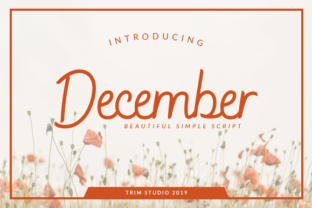
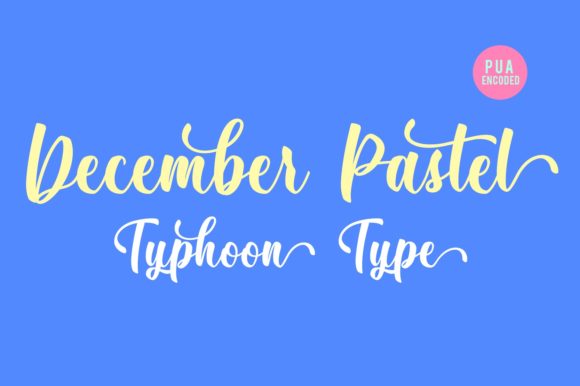
December Pastel isn’t just another script font—it’s a quiet moment of intention made visible. With soft, rounded strokes, gentle contrast, and subtle irregularities that echo natural handwriting, it carries warmth without sacrificing polish. The letterforms breathe: lowercase a and g have open, friendly counters; the t features a delicate upward flick; capitals sit with relaxed confidence, never stiff or over-rendered. It’s not ornate—but it’s expressive. Not casual—but never formal. That balance is why designers reach for December Pastel when they want authenticity *and* refinement in the same stroke.
Where December Pastel Earns Its Place
This is a display font first—designed to stand out, not blend in. It thrives where personality matters most: logo design for boutiques, bakeries, wellness studios, and indie publishers; name tags and welcome signage at small conferences or wedding events; product packaging for artisanal teas, candles, or handmade soaps; and social media greeting cards that feel personal, not templated. On clothing, it works beautifully on chest prints or sleeve details—especially on organic cotton or linen, where its softness mirrors the fabric’s texture.
In editorial design, December Pastel shines as a headline font—not body copy. Pair it with a clean, neutral sans serif (like Inter, Poppins, or Lato) for magazine covers or newsletter headers. In web design, use it sparingly: hero section titles, CTA buttons with ample spacing, or quote callouts. Avoid long paragraphs, fine print, or low-resolution screens—its charm relies on legibility at medium to large sizes (24px and up on screen, 14pt+ in print).
What It Does for Your Brand—Beyond Aesthetics
Typography shapes perception faster than most realize. December Pastel signals approachability, care, and human-centered values. It subtly tells your audience: *This isn’t corporate by default. This was chosen with thought.* That impression supports brand consistency across touchpoints—whether a printed gift tag matches the Instagram Story sticker, or the same script appears on a coffee sleeve and a thank-you email header. Consistency like that builds recognition. Recognition builds trust.
But don’t mistake softness for weakness. December Pastel holds presence. Its even rhythm and balanced spacing prevent visual fatigue—even in short bursts of text. Unlike some overly flourished scripts, it doesn’t sacrifice readability for flair. That means your holiday sale banner or “New Collection” announcement lands clearly, not decoratively. And because it avoids trend-driven extremes (no sharp angles, no exaggerated swashes), it ages well—making it a practical investment for brands planning multi-season campaigns.
Choosing—and Using—December Pastel Thoughtfully
Before licensing December Pastel, ask two questions: Is this the voice I want to lead with? and Will it serve my audience—not just my aesthetic? A law firm’s website? Probably not. A ceramicist launching an online shop? Very likely yes. Test it early: paste your actual business name into a mockup alongside three alternatives. See which feels most *true*, not just most pleasing.
Check what’s included. Most legitimate releases of December Pastel include at least one weight (often Regular) with standard Latin characters, numerals, and basic punctuation. Some versions add OpenType features like stylistic alternates or ligatures—useful for refining word shapes (e.g., adjusting how “Th” or “ff” connects). If you need bold or italic variants, verify whether those exist separately—or if you’ll need to pair December Pastel with a complementary font for emphasis.
Font pairing is where December Pastel truly settles into its role. Try it with a warm, low-contrast sans serif (like Manrope or Nunito) for digital layouts, or a gentle serif (Cormorant Garamond, EB Garamond) for print brochures. Avoid competing scripts or high-contrast serifs—they’ll clash tonally. And always test hierarchy: set your headline in December Pastel at 36px, then drop to 18px for subheads in your paired font. Does the relationship feel intentional? Does the eye move where you want it to?
Licensing, Legibility, and Real-World Limits
December Pastel is a commercial font—meaning personal use (like a hobbyist’s printable planner) may be permitted under some licenses, but selling products featuring the font (T-shirts, mugs, digital templates) requires a commercial license. Always read the license terms before downloading or embedding. Reputable vendors provide clear documentation; if you’re unsure, contact the foundry directly.
Legibility hinges on context. It performs best with generous line spacing (1.4–1.6), ample letter spacing (50–100 tracking units in design apps), and high-contrast backgrounds (dark script on light background, not reversed unless tested carefully). Avoid all-caps usage—it flattens its character. And skip tight containers: a narrow Instagram caption box or tiny mobile button won’t do it justice.
One real-world observation: December Pastel often reads *warmer* in print than on screen. The slight ink spread in offset printing softens edges further—enhancing its handmade feel. That’s why many stationers prefer it for letterpress invitations or foil-stamped business cards. But on low-DPI devices, thin strokes can blur. Always export test renders at actual size and view them on multiple screens before finalizing.
A Final Note on Intention
Great typography isn’t about chasing what’s trending—it’s about matching tone to truth. December Pastel works because it doesn’t try to be everything. It’s specific. It’s considered. It invites pause, not speed. Use it where warmth matters more than urgency, where craft matters more than scale, and where your audience values sincerity over slickness. Whether you’re designing a seasonal menu, launching a micro-brand, or sending a heartfelt note to your email list—December Pastel helps you say it like you mean it.