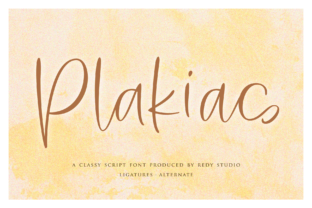
Plakias: A Classy Script Font for Upscale Design Projects
Plakias is a refined script font designed with elegance and intention. It’s not just another decorative handwriting style—it’s built for visual impact in contexts where sophistication matters. With its smooth, confident strokes and carefully crafted letterforms, Plakias conveys luxury without excess. What sets it apart isn’t just appearance, but structure: it includes a rich set of stylistic alternates—swashes, ligatures, contextual forms, and discretionary capitals—that let designers fine-tune expression across applications.
What Makes Plakias Distinctive?
Unlike many script fonts that rely on exaggerated flourishes or inconsistent rhythm, Plakias balances fluidity with readability. Its baseline alignment is stable, its x-height generous, and its spacing calibrated for both tight settings (like product packaging) and open compositions (such as wedding invitation suites). The alternates aren’t decorative afterthoughts—they’re integrated into the font’s OpenType features, meaning they activate automatically in compatible software when enabled, reducing manual labor while increasing typographic nuance.
This level of control matters most when tone and perception are critical. A handwritten-style logo using Plakias reads as intentional and curated—not casual or improvised. That distinction becomes especially relevant when comparing script fonts for brand identity work, where consistency across digital and print touchpoints is non-negotiable.
Where Plakias Fits Among Script Fonts
Script fonts fall broadly into three categories: formal scripts (elegant, structured, often inspired by calligraphy), casual scripts (loose, energetic, mimicking quick pen strokes), and brush scripts (textured, organic, sometimes irregular). Plakias sits firmly in the formal script category—but with subtle modernization. It avoids the rigid formality of historical models like Snell Roundhand or Edwardian Script, which can feel dated or overly ornate in contemporary layouts. Instead, Plakias offers restrained contrast between thick and thin strokes, clean terminals, and a slightly upright posture that enhances legibility at smaller sizes.
Compared to more playful or experimental scripts, Plakias prioritizes versatility over novelty. It doesn’t aim to surprise—it aims to elevate. That makes it less suitable for youthful branding or irreverent campaigns, but highly effective for premium beauty lines, boutique hospitality, artisanal food packaging, or editorial features where gravitas supports the message.
Practical Use Cases—and When to Pause
Plakias excels in applications where hierarchy and emotional resonance matter more than dense text. For example:
- Signature logos: Its alternates allow designers to craft unique monograms or wordmarks that retain character across scales—from app icons to storefront signage.
- Wedding stationery: The font’s warmth and polish align naturally with high-end invitations, RSVP cards, and ceremony programs—especially when paired with minimalist layouts and quality paper stocks.
- Social media headers: On platforms like Instagram or Pinterest, where visual cohesion drives engagement, Plakias adds instant refinement to profile banners or story highlights without requiring custom illustration.
- Product packaging: Small-batch skincare, specialty teas, or craft spirits benefit from Plakias’ ability to signal craftsmanship and care—even before the consumer reads a single word.
That said, Plakias isn’t built for body text or interface elements. Its design intentionally sacrifices functional neutrality for expressive strength. You wouldn’t use it for website navigation, legal disclaimers, or multi-paragraph quotes. Legibility drops significantly below 16pt in digital environments, and screen rendering varies across operating systems—particularly with complex alternates enabled. If your project demands long-form readability or strict accessibility compliance (e.g., WCAG AA contrast and font-size requirements), Plakias should remain a display-only choice, paired with a robust sans serif or serif for supporting text.
Tradeoffs to Consider Before Choosing
Like any specialized tool, Plakias comes with practical tradeoffs. First, its strength lies in controlled environments—designs you fully own and optimize. In dynamic or CMS-driven contexts (like blog post titles generated automatically), automatic alternates may not render consistently, leading to unexpected glyph substitutions or fallback behavior. Second, licensing matters: Plakias is typically offered as a commercial font, meaning usage rights vary depending on whether you’re designing for personal projects, client work, or embedded digital products. Always verify license scope—especially if output includes webfonts or mobile apps.
Third, while Plakias offers stylistic depth, it does so within a narrow tonal range. It communicates “refined,” “timeless,” and “assured”—but not “playful,” “rebellious,” or “futuristic.” If your brand voice requires irony, edge, or cultural specificity (e.g., regional calligraphic traditions), Plakias may feel too generic or misaligned, no matter how well-executed the layout.
How It Compares in Real-World Workflow
In practice, designers often evaluate Plakias alongside other high-quality formal scripts—not just by appearance, but by technical execution. Does the font include true small caps? Are figure styles tabular or proportional? How many weights does it offer? Plakias is typically released as a single-weight family, which simplifies pairing but limits typographic hierarchy options. That’s fine for focused applications (a logo + one supporting typeface), but less flexible than multi-weight families where bold or light variants support layered information design.
Also worth noting: Plakias’ OpenType features are robust but require familiarity with font menus in Adobe apps or CSS @font-face declarations. Beginners may find the learning curve steeper than drag-and-drop alternatives—though the payoff in polish is measurable. For teams using collaborative tools like Figma, ensure the font is properly licensed and accessible to all contributors; otherwise, missing glyphs or substituted fonts can derail version control.
Making the Right Choice for Your Project
Ask yourself three questions before committing to Plakias:
- Is the primary goal to communicate prestige, intimacy, or tradition? If yes, Plakias supports that intent strongly. If the goal is speed, clarity, or broad demographic appeal, another option may serve better.
- Do you control the final output environment? Plakias shines in print, static web graphics, and controlled digital displays. In responsive or user-generated contexts, test thoroughly—or reserve it for hero elements only.
- Does your supporting typography complement—not compete—with Plakias’ voice? Pairing it with a neutral, well-spaced sans serif (like Inter, Helvetica Now, or FF Meta) usually works. Avoid other high-contrast or decorative fonts nearby, which can create visual tension rather than harmony.
Ultimately, Plakias isn’t about being “the best” script font overall—it’s about being the right one for specific moments where design must quietly assert value. It rewards thoughtful application, respects typographic craft, and avoids chasing trends. That makes it especially valuable for professionals who prioritize longevity over virality, coherence over novelty, and intention over impulse.
If you’re evaluating fonts for an upcoming project, treat Plakias as a precision instrument—not a default. Test it early in mockups, compare it against alternatives at actual size and context, and observe how it behaves under real constraints. When aligned with purpose, audience, and medium, Plakias delivers results that feel both effortless and unmistakably deliberate.