December: A Simple Script Font with Warmth
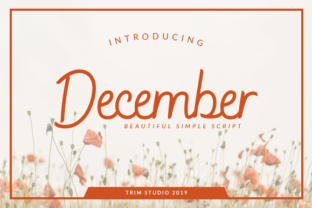
December is a beautiful, hand-crafted script font—light, flowing, and intentionally unpolished. It’s not flashy or ornate. Instead, it feels like ink gently pulled across paper: slightly uneven letterforms, subtle contrast in stroke weight, and natural entry/exit strokes that suggest movement rather than perfection. That quiet authenticity is why designers, small business owners, educators, and creators return to December again and again—not for novelty, but for resonance.
Why December Works Where Other Scripts Fall Short
Many script fonts try too hard—to dazzle, to mimic calligraphy, or to feel “luxury.” December doesn’t. Its simplicity is its strength. Letters sit comfortably on the baseline without excessive slant or exaggerated flourishes. That means it scales well—from tiny business card text to large-format posters—without losing legibility or warmth. It’s also highly readable at smaller sizes, especially when used in short phrases or single-line headlines.
Because December avoids extreme thin-to-thick transitions, it pairs effortlessly with clean sans-serifs (like Inter, Lato, or Montserrat) or even modest serifs (such as Merriweather or Source Serif). That versatility makes it ideal for branding systems where personality matters—but clarity can’t be compromised.
Creative Applications That Feel Human, Not Generic
December shines brightest when used to convey care, sincerity, or quiet intention. Think of it less as decoration and more as voice—your brand’s handwritten note tucked into a package, your classroom poster that feels welcoming instead of institutional, or your blog quote graphic that invites pause instead of scrolling past.
- Greeting cards: Use December for names, short sentiments (“With love,” “Happy birthday,” “Thinking of you”), or closing signatures. Pair it with a soft background texture or muted color palette to reinforce intimacy.
- Small business branding: Local bakeries, florists, handmade goods shops, and wellness practitioners often choose December for logo submarks, packaging tags, or social media story highlights—places where warmth builds trust faster than polish.
- Educational materials: Teachers use December for classroom rules posters, student award certificates, or reading corner labels. Its approachability helps lower cognitive load for younger learners—and feels respectful, not childish.
- Digital content: On blogs or newsletters, December works well for pull quotes, section dividers, or featured author bylines. Avoid long paragraphs; instead, apply it selectively to highlight meaning—not fill space.
How Different Users Adapt December Thoughtfully
A freelance designer might use December as a secondary typeface—never the primary UI font, but consistently for client-facing touches: proposal headers, invoice notes, or email signature lines. That repetition builds recognition without overwhelming the layout.
An educator creating printable resources may export December text as SVGs or high-res PNGs to preserve crisp edges when printed—especially important for black-and-white handouts or laminated visuals. They’ll avoid light gray text on white backgrounds, knowing December’s fine strokes need contrast to stay clear.
A blogger writing about mindfulness or slow living might apply December only to opening epigraphs or closing reflections—never body copy. That restraint signals intention: this isn’t just another font choice. It’s part of the tone.
A small publisher releasing poetry chapbooks could set poem titles in December and body text in a neutral serif. The contrast honors both the emotional weight of the title and the quiet authority of the verse itself.
Practical Tips for Consistency and Clarity
December rewards thoughtful application—not volume. Here’s how to keep results effective:
- Limit usage to one or two visual roles per project. If it’s your logo accent, don’t also use it for navigation menus or footer text. Repetition should feel intentional, not repetitive.
- Test print early. Some printers compress fine details. Print a test sheet at actual size before finalizing business cards or packaging. Adjust tracking slightly if letters appear crowded at small sizes.
- Respect line length. December reads best in short bursts—under 30 characters for tight spaces (like Instagram story text), up to 60–70 for wider poster lines. Longer blocks fatigue the eye.
- Pair with generous whitespace. Let December breathe. Add extra line height when used in display settings, and avoid cramming it beside dense imagery or busy patterns.
- Stay true to your audience’s expectations. A tech startup targeting developers likely won’t benefit from December in its main interface—but it could soften the tone of its customer onboarding emails or community newsletter headers.
Going Beyond Decoration: When December Becomes Meaningful
Fonts don’t communicate in isolation—they carry context. December gains meaning through how and where you place it. A café using it on chalkboard-style menu boards signals craft and care. A therapist using it on appointment reminder cards suggests gentleness and presence. A nonprofit using it on donor thank-you graphics reinforces gratitude over transaction.
That power comes from alignment—not aesthetics alone. Ask yourself: Does this use reflect how I want people to feel when they see it? Does it match the pace, values, and voice of what’s being said? If December feels right in that moment, it probably is.
It’s also worth noting that December works especially well in contexts where digital fatigue is high—email subject lines, printed workshop handouts, physical product tags, or analog-style digital illustrations. Its slight imperfection becomes an anchor in an overly smoothed world.
Getting Started Without Overthinking
You don’t need a full branding system to begin. Try one small, low-risk experiment this week:
- Add December to your next personal email signature—just your name or title.
- Redesign one recurring slide in your presentation deck (e.g., your closing “thank you” slide).
- Replace the default font in a Canva quote graphic with December—and adjust the background to something tactile (paper texture, watercolor wash, soft linen).
- Print a single phrase—“Breathe,” “You belong here,” or “Made with care”—in December on cardstock and hang it where you work.
Notice how it changes the feeling—not just the look. That’s the point. December isn’t about making things prettier. It’s about making them feel more human.