Ostende: Elegant Handwritten Font for Real Projects
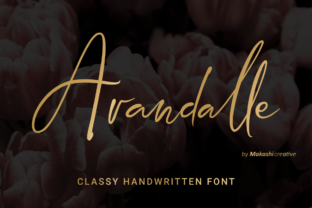
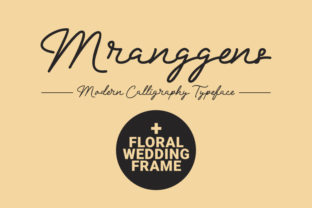
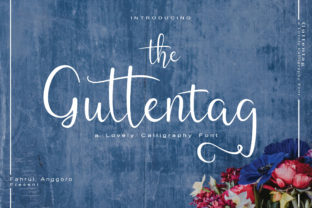
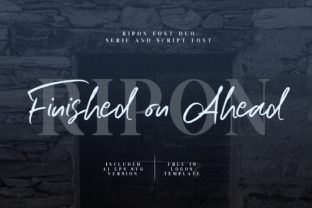
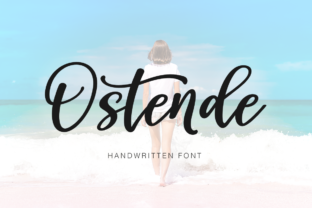
There’s a quiet confidence in handwriting that no algorithm can replicate — the slight variation in stroke weight, the organic rhythm of connected letters, the subtle tilt that says “human, present, intentional.” Ostende captures that essence without sacrificing clarity or versatility. It’s not just another script font — it’s a carefully crafted handwritten typeface with elegant proportions, graceful terminals, and consistent spacing that works where many scripts fail: at small sizes, across digital interfaces, and alongside modern sans-serif companions.
Why Ostende Stands Out Among Handwritten Fonts
Most handwritten fonts fall into one of two traps: either they’re so ornate they become illegible outside of headlines, or they’re so simplified they lose personality entirely. Ostende avoids both. Its lowercase ‘a’, ‘g’, and ‘y’ feature true double-story forms — not decorative flourishes, but functional, readable shapes rooted in calligraphic tradition. The capitals have presence without dominance, and the connecting strokes flow naturally, supporting legibility in words like “celebration”, “together”, or “artisan” — all common in branding, event design, and storytelling contexts.
What makes Ostende especially practical is its built-in typographic harmony. It includes standard ligatures (like “fi”, “fl”) and discretionary ones (like “th”, “ow”) that activate automatically in OpenType-aware apps — no manual swapping needed. That means you get refined texture *and* efficiency. Designers using Figma, Adobe Illustrator, or Affinity Publisher can apply Ostende to a logo lockup or invitation suite and trust that spacing, kerning, and rhythm hold up — even when exported to web or print.
Creative Uses That Go Beyond Decoration
Ostende thrives where authenticity matters — not as background ornament, but as active voice. Here’s how different creators use it meaningfully:
- Small business owners apply Ostende to product labels (e.g., ceramic mugs, artisan soap wraps) because its warmth signals care and craft — while its clean baseline keeps shelf readability intact.
- Educators and course creators use it sparingly in slide headers or workbook chapter titles — never for body text — to add approachability without undermining accessibility or screen readability.
- Bloggers and newsletter writers pair Ostende with a neutral sans-serif (like Inter or Manrope) for email subject lines or featured quote graphics. The contrast feels intentional, not trendy — and converts better than all-script layouts.
- Wedding designers and stationers build full invitation suites around Ostende’s natural rhythm — using its light weight for RSVP cards and bold weight for ceremony programs — all while keeping hierarchy clear through size and spacing, not just style.
Adapting Ostende Across Formats & Platforms
One size doesn’t fit all — and neither does one weight or color treatment. Ostende comes in multiple weights (Light, Regular, Bold), each designed to retain character at different scales. Use Light for delicate watermark effects on social banners; Regular for printed menus or packaging copy; Bold only where emphasis is truly earned — like a single headline on a homepage hero section.
On screen, test contrast: Ostende reads best over soft neutrals (oat, warm gray, ivory) or deep tones (navy, charcoal). Avoid pure black-on-white for long blocks — it’s visually loud. Instead, try #2d2d2d on #f9f8f6 for digital use. For print, set line spacing at 1.4–1.6x the font size to preserve airiness — critical for handwritten fonts that can feel cramped if tightened.
When exporting for web, use variable font files if your platform supports them (like WordPress with proper theme configuration), or serve static WOFF2 files with @font-face declarations that include font-display: swap. This ensures fast loading and graceful fallbacks — no invisible text, no layout shifts.
Keeping Your Work Clear, Consistent, and Audience-Friendly
Handwritten fonts invite playfulness — but consistency anchors creativity. Before launching a project with Ostende, define simple rules: Where will it appear? What will it never do? For example:
- Ostende is used only for primary headlines and short quotes — never for paragraphs, captions, or navigation.
- It appears in one weight per context (e.g., Regular for print, Bold only for large-format signage).
- It’s always paired with the same sans-serif — no switching between Montserrat, Poppins, and Lato across assets.
These constraints don’t limit expression — they sharpen it. A bakery using Ostende on its aprons, receipt tape, and Instagram highlights builds instant recognition. A freelance illustrator using it only on portfolio project titles (with consistent letter-spacing of +20) creates rhythm that guides the eye — not distracts from the work.
Real Ideas You Can Start Today
You don’t need a full rebrand to benefit from Ostende. Try one of these low-lift, high-impact applications:
- Create a printable “thank you” card template for client projects — use Ostende for the greeting (“Thank you for trusting this work”), then switch to a clean sans for the rest. Export as PDF and keep it ready.
- Redesign your email signature: Add Ostende for your name only (not title or contact info), sized 1–2pt larger than the rest. It adds polish without clutter.
- Design a simple workshop handout cover: Ostende for the title, centered; a thin rule beneath; then body text in a highly legible sans. Print five copies and test readability at arm’s length.
- Use Ostende in a Canva social post for a new blog post — but only as the pull quote, not the headline. Let the image and caption do the heavy lifting; let Ostende add tone.
Ostende isn’t about looking “handmade” — it’s about communicating with intention. It rewards thoughtful pairing, respects reader attention, and supports real goals: building trust, guiding decisions, honoring craftsmanship, and making information feel human again. Whether you're sketching a logo on paper or fine-tuning a Shopify banner, Ostende works when you let it serve the message — not the other way around.
The most effective typography doesn’t shout. It listens first — to the audience, the medium, the purpose — then responds with clarity and grace. That’s what Ostende offers: elegance with intent, beauty with function, and handwriting that holds space without taking over.