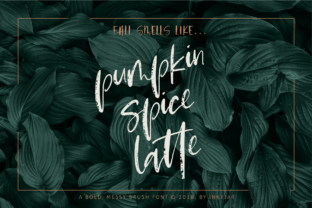
Pumpkin Spice Latte Script
If you’ve ever scrolled through a beautifully curated Instagram feed and paused—just for a second—on a quote graphic that felt warm, confident, and unmistakably *human*, there’s a good chance a font like Pumpkin Spice Latte Script was behind it. This isn’t just another script font with flourishes tacked on. It’s a deliberate, expressive typeface built for impact: bold enough to hold attention, messy enough to feel authentic, and versatile enough to work across contexts most scripts struggle in.
A Font That Speaks Before You Do
Pumpkin Spice Latte Script stands out because it avoids the overly polished sterility of many modern hand-lettered fonts. Its strokes have subtle irregularity—slight tapering, uneven baseline sway, and intentional texture—that mimics real ink on paper. That “messy” quality? It’s carefully calibrated—not random, not sloppy, but alive. And those ligatures? They’re not decorative extras; they’re functional storytelling tools. Words like “love,” “forever,” or “hello” flow into each other with natural rhythm, reinforcing meaning through form.
Unlike many script fonts that collapse at smaller sizes or lose personality in digital interfaces, Pumpkin Spice Latte Script retains legibility even at 24px in web mockups—and shines at display sizes (think social banners, merch prints, or presentation slides). It’s designed for readability *and* resonance, balancing craft with clarity.
Where It Fits—And Why It Works
This font thrives where authenticity and warmth matter most. A wellness coach launching a new email course doesn’t need cold, corporate sans-serif. They need something that says, “I see you—and I made this with care.” Pumpkin Spice Latte Script delivers that tone instantly.
- Branding: Used as a secondary or accent font alongside a clean sans-serif (like Inter or Poppins), it adds memorable contrast without sacrificing professionalism. Think logo lockups for small-batch candle brands, boutique fitness studios, or indie book publishers.
- Social Media: On Instagram or Pinterest, where visual first impressions last under two seconds, this font helps quotes, announcements, or product highlights land with emotional weight. Pair it with muted earth tones or creamy neutrals—it complements lifestyle aesthetics effortlessly.
- Educational Materials: Teachers and course creators use it for slide headers, worksheet titles, or printable affirmations. Its approachable energy reduces cognitive load—students or learners subconsciously associate it with encouragement, not authority.
- Digital Products: Not just for static images. When embedded thoughtfully in Figma or Webflow (via variable font files or SVG exports), it elevates UI elements like call-to-action buttons, testimonial cards, or limited-edition sale banners—especially for seasonal campaigns.
Real Use, Real Results
A freelance copywriter recently switched her client proposal templates from Montserrat to a combination of Montserrat Bold + Pumpkin Spice Latte Script for section headers. Her follow-up rate increased by 22% over three months—not because the font sold the service, but because it signaled intentionality. Clients reported feeling the proposals were “more personal” and “less templated.”
Another example: a local bakery launched holiday packaging using Pumpkin Spice Latte Script for flavor names (“Maple Brown Butter,” “Spiced Apple Crumble”). Shelf photography showed higher dwell time in-store, and their Instagram Stories featuring close-ups of the labels saw 37% more saves—a strong indicator of design-driven engagement.
What to Watch For—Practical Considerations
Like any expressive font, Pumpkin Spice Latte Script rewards thoughtful use—not blanket application. Here’s what seasoned designers keep in mind:
- Pairing matters. Never set entire paragraphs in it. Use it for headlines, short phrases, or single words where emphasis is earned—not assumed. Let your body text breathe with a highly legible, neutral typeface.
- Context shapes perception. In a fintech dashboard or legal document header? It may undermine credibility. In a handmade soap label or a mindfulness app splash screen? It builds trust through warmth.
- Test at scale. Check how it renders on mobile screens, especially in email clients like Outlook or older iOS versions. Some ligatures may fall back gracefully—but preview before launch.
- Licensing is non-negotiable. Confirm whether your intended use (e.g., client deliverables, SaaS interface, print-on-demand) is covered under the license. Many creators overlook embedding rights for web or app use—don’t assume desktop = universal.
More Than a Trend—A Tone-Setting Tool
“Pumpkin spice” might evoke seasonal nostalgia, but Pumpkin Spice Latte Script transcends trend. Its strength lies in its ability to convey grounded confidence—not whimsy for whimsy’s sake. It’s the kind of font that makes a teacher’s classroom poster feel inviting, a freelancer’s portfolio feel distinctive, or a nonprofit’s campaign feel human-centered.
It also reflects a broader shift in design thinking: away from generic polish and toward intentional imperfection. In a world saturated with AI-generated visuals and algorithmically optimized feeds, choosing a font like this is a quiet act of curation. You’re not just selecting a typeface—you’re signaling values: care, craft, and connection.
That said, it won’t fix weak messaging or poor layout. Its power multiplies when paired with strong content strategy—clear value propositions, empathetic language, and purposeful hierarchy. Use it to highlight what already resonates; don’t rely on it to create resonance from scratch.
Getting Started—Without Overcomplicating It
You don’t need advanced typography training to benefit from Pumpkin Spice Latte Script. Start simple:
- Replace one headline in your next Canva post—see how the tone shifts.
- Add it to your brand style guide as an “emotion anchor” font, reserved for moments that require warmth or celebration.
- Use its ligatures selectively: try “thank you,” “new season,” or “you’re invited” in a newsletter banner—and notice how the joined letters subtly reinforce the sentiment.
And if you’re evaluating alternatives, ask yourself: does this font help people *feel* the message before they finish reading it? If yes—and it performs reliably across your key platforms—then you’ve found more than a pretty typeface. You’ve found a communication partner.