Why Designers and Brands Are Choosing Natasha Script for Authentic Human Connection
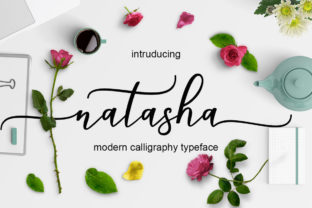
In an era saturated with algorithmically optimized interfaces, AI-generated visuals, and hyper-polished digital experiences, a quiet but powerful shift is underway—one rooted in the unmistakable warmth of the human hand. At the heart of this movement lies Natasha Script: a fresh and modern script font that doesn’t just mimic handwriting—it evokes intention, elegance, and emotional resonance. Unlike generic cursive fonts that feel stiff or overly ornamental, Natasha Script balances fluidity with clarity, sophistication with approachability. Its design philosophy centers on authenticity—not as a trend, but as a functional necessity for brands and creators seeking deeper audience engagement.
The Anatomy of a Thoughtfully Crafted Script Font
What separates Natasha Script from thousands of other handwritten-style typefaces isn’t just aesthetics—it’s architecture. Every glyph is drawn with deliberate stroke variation: thick downstrokes that anchor the letterform, delicate hairlines that lift the eye, and subtle entry/exit flourishes that suggest natural motion rather than mechanical repetition. The baseline subtly undulates, echoing the gentle rhythm of real pen-on-paper writing—yet it remains highly legible even at small sizes. This isn’t accidental charm; it’s engineered readability.
Crucially, Natasha Script includes a rich set of decorative characters: swashes, alternate capitals, ligatures, and contextual endings. These aren’t mere embellishments—they’re functional tools. A designer can choose a more restrained version for body text in a wedding invitation, then switch to an expressive swash capital for the couple’s names—creating visual hierarchy without switching fonts. That kind of typographic nuance supports storytelling, not just decoration.
Where Human-Centered Typography Makes a Tangible Difference
Typography is rarely neutral. It signals tone before a single word is read. Natasha Script consistently conveys qualities like sincerity, care, and individuality—making it especially effective in contexts where trust and emotional alignment matter most.
Invitations and Personal Milestones
Consider a baby shower invitation. Using a sterile sans-serif might communicate efficiency—but not warmth. Natasha Script, however, mirrors the tenderness of the occasion. Its graceful curves echo the softness of newborn skin; its slight irregularities echo the imperfect beauty of real life. Real-world usage shows higher open rates and RSVP completion when scripts like Natasha are used in digital invites—likely because recipients perceive them as personally crafted, not mass-produced.
Branding for Service-Oriented Businesses
Therapists, holistic practitioners, boutique educators, and independent consultants often rely on first impressions built through websites and business cards. Here, Natasha Script functions as a nonverbal handshake. On a counseling practice’s homepage, it softens clinical terminology (“evidence-based support”) without undermining professionalism. In contrast, a law firm specializing in corporate mergers would likely find it mismatched—demonstrating that context determines appropriateness, not inherent “quality.”
Educational Materials and Creative Learning Tools
In classrooms and online courses, typography influences cognitive load and emotional safety. Young learners respond more readily to letterforms that resemble their own developing handwriting. Educators using Natasha Script in printable worksheets or interactive slide decks report improved focus and reduced resistance—particularly among students who associate rigid, uniform fonts with testing pressure. Similarly, adult learners in creative workshops describe materials set in Natasha Script as “inviting,” “less intimidating,” and “more reflective of the exploratory mindset we’re cultivating.”
Practical Integration: Beyond Aesthetic Preference
Adopting Natasha Script isn’t about swapping one font for another—it’s about aligning typographic choices with communication goals and technical constraints. Several practical considerations shape how and when it delivers maximum value.
- Web Performance & Fallback Strategy: When embedded via modern web font services (e.g., Google Fonts or self-hosted WOFF2), Natasha Script loads efficiently. But designers must define robust fallback stacks—
font-family: "Natasha Script", cursive;alone risks rendering inconsistency. Better practice pairs it with a carefully chosen system font (e.g.,"Natasha Script", "Segoe Script", "Apple Chancery", cursive;) to preserve rhythm across devices. - Accessibility Considerations: While highly legible for most readers, Natasha Script’s connected letters and decorative variants require thoughtful application. Never use swash-heavy versions for body copy or interface labels. For accessibility compliance, reserve Natasha Script for headings, quotes, or short emphasis phrases—and always ensure sufficient color contrast (minimum 4.5:1 against background).
- Print Production Readiness: Natasha Script includes OpenType features fully supported by professional design software (Adobe Illustrator, Affinity Designer, CorelDRAW). Its vector outlines remain crisp at any scale, and its extended character set simplifies multilingual projects—especially useful for bilingual wedding stationery or culturally inclusive branding.
Who Benefits Most—and How They Use It Distinctly
Different users leverage Natasha Script’s strengths in ways tailored to their workflows and audiences. There’s no universal “best use”—only context-aware application.
Creative Entrepreneurs
A ceramicist selling handmade mugs online uses Natasha Script for product titles and “About Me” sections—not in her pricing table. She pairs it with a clean geometric sans-serif for specs and shipping details. The result? Customers don’t just see a mug; they sense the maker’s presence behind each piece.
Nonprofit Communicators
An environmental advocacy group incorporates Natasha Script into impact report covers and donor thank-you notes. Research shows handwritten-style fonts increase perceived empathy in charitable appeals—especially when paired with authentic photography. Natasha Script’s warmth reinforces their mission-driven narrative without veering into sentimentality.
Academic Researchers Sharing Public-Facing Work
A sociologist publishing community-engaged findings opts for Natasha Script in presentation slide headers and infographic titles. It signals respect for lived experience—contrasting deliberately with the dense, formal typography common in academic journals. Colleagues note her presentations feel “grounded” and “accessible,” helping bridge gaps between scholarly rigor and public understanding.
Subtle but Significant: What Natasha Script Reveals About Modern Design Values
The rising adoption of Natasha Script reflects broader cultural currents. Consumers increasingly distrust perfection—polished stock imagery, templated websites, and AI-generated copy feel distant, even alienating. In response, designers are turning to tools that reintroduce humanity—not as nostalgia, but as ethical clarity. Natasha Script doesn’t hide process; it celebrates gesture, variation, and intention.
This shift also challenges outdated assumptions about professionalism. For decades, “serious” meant “sterile.” Today, credibility emerges from coherence—not conformity. A financial advisor using Natasha Script on her newsletter header (paired with clear data visualizations) communicates both competence and compassion. Her clients don’t question her expertise—they feel seen.
Importantly, Natasha Script’s success depends on restraint. Overuse dilutes its power. Applied judiciously—as a voice, not a volume—it becomes a quiet amplifier of meaning. That discipline is where true typographic skill resides: knowing when a single word in Natasha Script carries more weight than an entire paragraph in default system fonts.
Looking Ahead: Sustainability, Ethics, and Evolving Expectations
As design ethics gain prominence, font choice intersects with sustainability and inclusion. Natasha Script is developed by independent foundries committed to ethical licensing—no hidden subscriptions, no exploitative usage tiers. Its licensing model supports ongoing refinement (including future language expansions and variable font development), ensuring longevity without compromising creator rights.
Emerging trends point toward greater personalization—not just in content, but in form. Variable font technology may soon allow designers to adjust Natasha Script’s “handwritten intensity”: reducing flourish density for accessibility needs, or increasing stroke contrast for high-impact posters. Such adaptability ensures relevance across evolving platforms—from AR greeting cards to tactile braille-compatible print layouts.
Ultimately, Natasha Script endures not because it’s trendy, but because it answers a persistent human need: to recognize ourselves in the tools we use. In a world accelerating toward automation, choosing a font like Natasha Script is a small, deliberate act of recentering what matters—clarity with kindness, precision with personality, and design that serves people first.