Hellmuth Family: A Bold, Playful Display Font
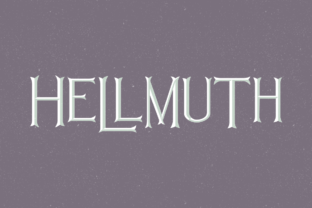
If you’ve ever walked past an old New York building and paused at its striking architectural lettering—solid, slightly weathered, full of character—you’ll instantly connect with the Hellmuth Family. This isn’t a font designed for paragraphs or body text. It’s a display typeface inspired by the entrance to the Hellmuth Building in New York, capturing that same confident, grounded presence—but with a twist of modern versatility.
What Makes Hellmuth Family Stand Out
At its core, The Hellmuth is a tightly crafted sans-serif with strong verticals, subtle tapering, and a quiet sense of rhythm. Its charm lies in how it invites interaction: designers are encouraged to mix lowercase and uppercase letters freely—not as a rule, but as a creative nudge. That randomness adds energy and authenticity, like hand-painted signage where no two letters feel exactly alike.
Beyond the base design, the family expands thoughtfully. There’s a clean shadowed version that adds depth without overwhelming, a “shadow only” variant for layering over images or textures, and a beveled option that gives a tactile, almost 3D impression—ideal for posters, social banners, or product mockups where visual impact matters most.
Where Hellmuth Family Fits in Real Projects
This font shines when clarity meets personality. Think of a local café launching a new seasonal menu—Hellmuth Family works beautifully for the headline “Autumn Harvest Special,” especially if you alternate caps and lowercase (“aUtUmN hArVeSt sPeCiAl”) to echo chalkboard charm. Or imagine a freelance designer crafting a logo for a boutique architecture studio: the beveled style lends gravitas, while the shadow-only version lets them overlay text cleanly on a photo of brickwork or steel beams.
Educators creating classroom posters, small business owners designing event flyers, bloggers spicing up Instagram story headers—all find practical value here. It’s not about fitting every need; it’s about having the right tool for moments where tone, texture, and attention matter more than neutrality.
Why Designers Reach for This Typeface
Many display fonts fall into one of two traps: overly decorative (hard to read) or too minimal (easily forgettable). Hellmuth Family avoids both. Its proportions are generous, its spacing open, and its weight consistent enough to remain legible even at medium sizes—say, 48px on a website banner or 72pt on a printed poster.
It also supports expressive hierarchy without needing multiple weights. Want contrast? Swap between the standard and shadowed versions. Need dimension? Stack the shadow-only layer beneath the base text. Prefer something sharper? The beveled option delivers crisp edges that pop against flat backgrounds. No extra plugins, no complex setups—just smart, built-in flexibility.
Practical Tips for Getting Started
- Start simple: Try using just the standard version first. Set a short headline, then manually vary case—“New York” becomes “nEw yOrK”—and see how it changes the mood.
- Watch your contrast: Because of its strong shapes, Hellmuth Family pairs best with neutral, highly legible sans-serifs (like Inter, Open Sans, or Lato) for supporting text—not other display fonts.
- Respect scale: Avoid using it below 36px in digital contexts or under 24pt in print. It’s built for visibility, not subtlety.
- Test layering early: If you’re using the shadow-only or beveled variants, preview them over your intended background. A busy photo may mute the effect; a solid color makes it sing.
Things to Keep in Mind Before You Use It
Like any strong personality, Hellmuth Family has natural limits. It’s not meant for long-form reading, multi-page reports, or interfaces requiring rapid scanning (think dashboards or forms). Its strength is in short bursts—headlines, logos, titles, callouts—and its power comes from intentionality, not ubiquity.
Also, because the font encourages playful case mixing, it helps to have a light touch with consistency. A restaurant menu might use mixed case for dish names but keep prices in uniform uppercase for quick readability. A podcast cover could use the beveled style for the title and switch to clean sans-serif for the host name—balancing flair with function.
And remember: inspiration matters. Since it draws from real-world architecture, consider how physical signage uses light, shadow, and material. That mindset often leads to more thoughtful digital applications—like choosing a soft drop shadow for a warm, inviting vibe, or a sharp bevel for something sleek and modern.
Who Benefits Most From This Font?
Beginners appreciate how approachable it feels—even without deep typography knowledge, they can create something distinctive in minutes. Professionals love its reliability across formats: it scales cleanly from mobile banners to large-format prints. Entrepreneurs and small business owners find it refreshingly different from overused display fonts, helping their brand stand out without feeling gimmicky.
Freelancers report faster client approvals when presenting Hellmuth Family for branding concepts—it reads as intentional, not arbitrary. Educators use it to make learning materials visually memorable without sacrificing clarity. Even hobbyists building personal websites or crafting handmade greeting cards enjoy how easily it bridges “designed” and “human.”
A Final Thought on Using Hellmuth Family Well
The best results come not from following strict rules—but from observing how people respond. Does the mixed-case headline draw a smile? Does the shadowed version make your newsletter header feel more substantial? Does the beveled look add just enough polish to your Etsy shop banner? Those small reactions tell you more than any technical spec sheet.
That’s the quiet strength of Hellmuth Family: it doesn’t shout. It stands, confidently rooted in place—like the building that inspired it—and invites you to build something meaningful around it.