Janzen: A Handcrafted Uppercase Font for Texture, Identity, and Intentional Design
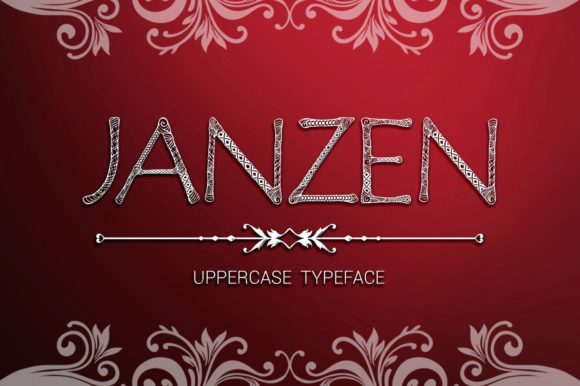
Janzen isn’t just another decorative typeface—it’s a deliberate design choice. Designed as a stunning handcrafted, uppercase-only font, Janzen brings organic texture, visual warmth, and unmistakable character to projects where personality matters. Its carefully shaped letterforms—each with subtle irregularities, weight shifts, and artisanal nuance—make it especially effective when you need to signal authenticity, craftsmanship, or brand distinction without relying on imagery alone.
For professionals and creators who treat typography as part of their workflow—not just decoration—Janzen fits naturally into stages where clarity of identity and emotional resonance are priorities. Whether you’re launching a new product line, refining a client’s visual system, preparing workshop materials, or personalizing handmade goods, Janzen serves as both a functional tool and a quiet statement of intention.
Where Janzen Fits in Your Creative or Business Workflow
Janzen works best when placed at strategic inflection points—not scattered throughout body copy, but anchored where impact is measured in recognition and retention. Think of it as a “signature moment” typeface: used sparingly, deliberately, and consistently to reinforce what makes your work distinct.
Before a project begins, Janzen helps define scope and tone. When sketching a brand identity brief or mood board, dropping in a monogram or logo lockup set in Janzen gives immediate feedback on whether the direction feels grounded, elegant, or approachable. Its uppercase constraint forces focus—you’re not choosing between weights or case variations; you’re deciding whether this voice aligns with your audience’s expectations.
During execution, Janzen becomes a consistency anchor. If you’re designing packaging, social assets, or print collateral for a small business, using Janzen for key identifiers—like shop name banners, product tags, or embroidered labels—creates visual continuity across formats. Because it’s handcrafted rather than algorithmically generated, it avoids the sameness that can dilute differentiation in crowded markets.
After delivery, Janzen supports long-term brand recall. Customers remember how something felt, not just how it looked. The tactile quality of Janzen—its implied brushstroke, its gentle asymmetry—translates into memory more readily than perfectly uniform sans-serifs. That’s why educators use it for course title slides, freelancers for portfolio headers, and makers for custom gift tags: it sticks, without shouting.
Practical Integration Across Tools and Platforms
Janzen is delivered as a standard OpenType font file (.otf), making it compatible with all major design and publishing software—including Adobe Creative Cloud (Photoshop, Illustrator, InDesign), Affinity Suite, Canva (via upload), Figma (with font syncing enabled), and even Microsoft PowerPoint and Word for quick mockups.
For seamless integration:
- Prepare your files first: Before importing Janzen into a multi-page document or template library, test it at various sizes and against your background colors. Its texture reads well on light backgrounds, but fine details may soften on dark or textured substrates—adjust tracking or size accordingly.
- Pair intentionally: Janzen shines alongside clean, neutral supporting fonts like Inter, Lora, or Source Sans Pro. Avoid pairing it with other highly decorative or script-based typefaces—clash distracts from its purpose. Let Janzen lead; let your secondary font support readability and flow.
- Standardize usage rules early: Create a one-line internal guideline—for example, “Janzen is used only for primary logos, monograms, and cover titles.” This prevents overuse and preserves its impact. Share that rule with collaborators, clients, or team members before files leave your studio.
Monograms, Branding, and the Power of Constraint
One of Janzen’s strongest practical applications is monogramming—whether for wedding stationery, boutique apparel tags, or personalized notebooks. Its uppercase-only nature eliminates case-related decisions and focuses attention on form, spacing, and rhythm. You’re not choosing between “J.A.” and “j.a.”—you’re calibrating how tightly or openly those letters interact.
This constraint also supports quality control. With no lowercase variants to manage, versioning stays simple. No risk of accidental lowercase usage undermining brand cohesion. And because each letter is crafted individually—not auto-generated from a base shape—the monogram feels unified, not assembled.
Small business owners report faster client sign-off when presenting monogram concepts in Janzen. Why? It signals care in execution before a single stitch is sewn or print run ordered. It tells the client, “We’ve thought about how your name will live in the world—not just how it looks on screen.”
Workflow Adjustments for Real-World Use
Adopting Janzen doesn’t require overhauling your entire toolkit—but it does ask for slight shifts in planning and review habits:
- Build it into your asset checklist: If you’re delivering a brand kit, include Janzen in your font list alongside usage notes—not just as a download, but as an instruction: “Use for hero treatments only; never for body text or data tables.”
- Test before scaling: At 12 pt, Janzen’s texture may blur in digital interfaces. Reserve it for 24 pt and above in web headers, or 36+ pt in print. Use it larger, less often—never smaller, more frequently.
- Account for export settings: When exporting PDFs for print, embed Janzen fully. For web use, convert headings to SVG or static images if variable font loading isn’t supported—its texture doesn’t translate reliably through webfont subsetting.
- Update your naming conventions: Label Janzen files clearly (e.g., Janzen-Regular.otf) and avoid renaming them. Consistent filenames prevent version confusion across team drives or client handoffs.
Long-Term Value and Consistency
Unlike trend-driven fonts that fade after a season, Janzen’s handcrafted aesthetic leans into timelessness—not by being generic, but by being human-made. That gives it staying power across business cycles, platform updates, and audience shifts.
Its longevity comes from how easily it integrates into evolving workflows. A blogger who starts with Janzen for newsletter headers can later apply it to podcast cover art or merch without relearning rules. An educator using it for course branding today can carry that same visual language into certificate designs or conference slide decks next year—with zero rebranding effort.
What sustains Janzen’s usefulness isn’t novelty—it’s reliability within defined boundaries. It doesn’t try to do everything. It excels where texture, identity, and memorability converge. And because it asks for intentionality in use, it trains you—and your collaborators—to make sharper, more confident typographic decisions over time.
Getting Started Without Overcomplicating Things
You don’t need a full brand audit to begin using Janzen effectively. Start small:
- Replace the header font on your next social media graphic with Janzen—and keep everything else unchanged.
- Design a single monogram for a personal project or client test file. Spend 10 minutes adjusting letter spacing and size until it feels balanced, not forced.
- Add Janzen to your template library as a “hero font” option—next to your go-to sans-serif and serif—and use it only when the goal is to elevate, not explain.
Each of these actions builds familiarity without pressure. You’ll start noticing where Janzen adds value—and where it doesn’t. That discernment is the real skill: knowing when a handcrafted uppercase font deepens meaning, and when simplicity serves better.
Janzen works because it respects process. It doesn’t shortcut thinking—it invites calibration, restraint, and attention to detail. And in a landscape saturated with interchangeable visuals, that kind of intentionality isn’t just practical. It’s essential.