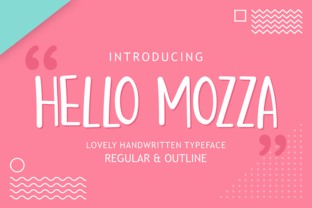
Hello Mozza: A Handwritten Font That Feels Like a Smile
Hello Mozza isn’t just another script font—it’s the kind of typeface that makes people pause mid-scroll. Its letters flow like ink from a well-loved pen, with gentle swells, soft terminals, and a playful rhythm that never feels forced. Designed to feel human—not perfect—Hello Mozza carries warmth, approachability, and quiet confidence. It’s not shouting for attention; it’s leaning in, offering charm and clarity in equal measure.
Where Hello Mozza Fits Naturally (and Why It Works So Well)
Think about the last time you saw a small-batch honey label, a boutique café menu, or an Instagram post from a ceramicist sharing their latest glaze test. Chances are, a font like Hello Mozza was part of that visual language—not because it’s trendy, but because it matches the tone: authentic, handcrafted, intentional. That’s where it shines brightest: in contexts where personality matters as much as legibility.
Small Businesses Building Trust Through Typography
For local bakeries, florists, or handmade soap makers, Hello Mozza helps communicate care and craft before a single word is read. A greeting card company might use it for “You’re loved” on the front—its soft curves echoing the tenderness of the message. A yoga studio could apply it to workshop posters (“Breathe In. Begin.”), reinforcing calm and presence without needing extra design flourishes. The font doesn’t compete with the brand—it supports it, quietly amplifying sincerity.
Creative Professionals Who Need Personality Without Pretense
Designers often juggle client expectations: “Make it friendly but professional,” “elegant but not stiff,” “modern but warm.” Hello Mozza answers those requests in one file. It works beautifully in logo lockups for lifestyle brands, especially when paired with a clean sans-serif for body text—creating contrast that feels balanced, not jarring. One freelance illustrator uses Hello Mozza exclusively for her client project titles (e.g., “Seasonal Sketchbook Series”), then switches to a neutral geometric type for descriptions. The result? Instant visual hierarchy—and emotional resonance.
Educators, Coaches, and Wellness Practitioners
In digital spaces saturated with clinical fonts and AI-generated visuals, Hello Mozza stands out by feeling *human*. A mindfulness coach might use it in printable affirmation cards (“You are enough—today and always”) or on a simple PDF guide titled “5 Gentle Morning Rituals.” Its readability at medium sizes (16–24pt) means it performs well on screens *and* printed handouts—no pixelation, no awkward spacing. Teachers creating classroom posters or parents designing birthday invites also find it intuitive: it feels familiar, like handwriting they’d do themselves—if only their penmanship were this consistent.
Real Situations Where Hello Mozza Makes a Difference
- Packaging for artisan goods: On a kraft paper tea box, Hello Mozza’s organic stroke variation mirrors the texture of the material—no need for extra illustration or embellishment.
- Social media graphics: For quote posts, its natural ascenders and descenders create visual interest even at small sizes on mobile feeds—without sacrificing clarity.
- Event branding: A wedding invitation suite using Hello Mozza for names and dates (paired with a crisp serif for details) feels personal and elevated—not generic or overly formal.
- Product labels: Think herbal tinctures, candle jars, or bath salts. Hello Mozza conveys care in formulation and attention to detail—qualities customers associate with small-batch production.
What to Keep in Mind Before You Use Hello Mozza
Like any expressive font, Hello Mozza thrives when used thoughtfully—not everywhere, and not all at once. Here’s what real users have learned through trial (and sometimes error):
Legibility at Smaller Sizes
Below 14pt, some characters—especially lowercase a, e, and s—start to soften into each other. That’s intentional (it mimics natural handwriting), but it means Hello Mozza isn’t ideal for dense body copy, footnotes, or legal disclaimers. Save it for headlines, short phrases, callouts, and decorative elements where impact matters more than volume.
Pairing It Well
It plays nicely with both classic and contemporary companions. Try it next to Inter or Manrope for clean contrast, or Playfair Display for elegant harmony. Avoid pairing it with other highly decorative scripts—that creates visual noise. And while it’s tempting to use multiple weights, Hello Mozza typically comes in one well-balanced weight. Embrace that simplicity: let it breathe, rather than trying to force boldness where it doesn’t live.
Licensing & Technical Fit
Before downloading or purchasing, check whether your intended use is covered—especially if you're embedding it in apps, email templates, or SaaS platforms. Most licenses cover desktop and web use for standard projects, but extended use (like white-label products or client deliverables requiring full font files) may need clarification. Also, verify OpenType features: Hello Mozza includes standard ligatures and stylistic alternates, which can add subtle polish—like swapping a default fl combo for a more connected version in logos.
Who Might Want to Look Elsewhere
Hello Mozza isn’t built for high-contrast corporate reports, tech dashboards, or multilingual interfaces with complex scripts. If your project demands strict accessibility compliance (e.g., WCAG AA for body text), rely on tested sans-serifs for long-form reading—and reserve Hello Mozza for moments where voice and vibe elevate meaning. Similarly, if your brand voice leans sharply minimalist, industrial, or futuristic, this font’s organic energy may feel tonally misaligned—even if it’s technically beautiful.
A Font That Grows With Your Projects
One unexpected strength of Hello Mozza? Its versatility across mediums. Designers report using it across everything from laser-cut wood signs (its smooth curves translate cleanly to CNC paths) to embroidered patches (where stitch counts benefit from generous letter spacing and open counters). Even motion designers appreciate how its natural rhythm lends itself to subtle entrance animations—letters appearing like ink flowing onto paper, rather than snapping into place.
It’s also age-resilient. Unlike fonts tied too tightly to a specific aesthetic moment (think early-2010s “rustic chic”), Hello Mozza avoids gimmicks. Its charm comes from restraint—not excessive swashes, not exaggerated bounce, not forced irregularity. That makes it feel fresh whether you’re using it in 2024 or revisiting a project in 2028.
Ultimately, Hello Mozza isn’t about solving a technical problem. It’s about solving a human one: how to make something feel seen, cared for, and true. Whether you're naming a new product line, designing a gift tag for a friend, or building a website for your pottery studio, it offers a quiet, confident way to say, “This matters—and so do you.”