Ribbon in the Sky: A Handwritten Font That Feels Like a Thoughtful Note
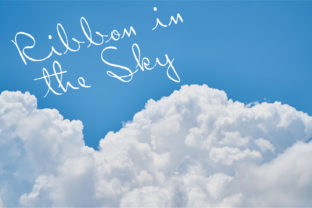
Imagine opening a wedding invitation and feeling the warmth of sincerity—not because of what it says, but how it’s said. Or scrolling through a boutique skincare site and pausing, just for a second, because the headline feels like it was written just for you. That’s Ribbon in the Sky at work: a naive handwritten font with quiet confidence, gentle curves, and surprising clarity. It’s not flashy or overly decorative—it’s approachable, legible, and quietly elegant.
Where Ribbon in the Sky Fits Naturally (Without Trying Too Hard)
This isn’t a font that shouts from the rooftops. It thrives where authenticity matters more than authority—where human connection is the goal, not visual dominance. Think of it as the typographic equivalent of a well-timed smile: subtle, genuine, and memorable.
Here’s where it shines most:
- Small-batch product packaging — Artisanal coffee bags, handmade candle labels, or small-run apothecary goods all benefit from Ribbon in the Sky’s soft rhythm. It signals care without sounding corporate. One ceramicist told us she switched her jar labels to this font and noticed customers lingering longer at her market stall—“They kept picking up the jars, reading the descriptions out loud.”
- Wedding and event stationery — From save-the-dates to menu cards, Ribbon in the Sky balances romance and readability. Unlike many script fonts that blur at small sizes, its open letterforms hold up beautifully at 14–16pt—even on textured paper or light ink. Couples appreciate that guests can actually read the time and location without squinting.
- Wellness and mindfulness brands — Yoga studios, meditation apps, and holistic therapists often lean into handwritten fonts to convey calm and intention. Ribbon in the Sky stands out here because it avoids looking “trendy” or forced. Its slight irregularity feels meditative—not chaotic—and its consistent x-height makes body text feel grounded, not fragile.
- Personal blogs and creative portfolios — Writers, illustrators, and photographers sometimes struggle to find a font that reflects their voice without overwhelming their visuals. Ribbon in the Sky works beautifully as a headline or pull-quote font alongside clean sans-serifs like Inter or Lato. It adds personality without sacrificing scannability—especially important for readers on mobile devices.
Who Gets the Most Out of It (and Why)
The beauty of Ribbon in the Sky is how differently it serves different people—depending on what they’re trying to say and who they’re saying it to.
Independent makers love it because it helps them stand out in crowded digital spaces—like Etsy or Instagram feeds—without needing custom illustration. It subtly communicates “I made this myself,” even when paired with polished photography.
Educators and nonprofit communicators find it effective for outreach materials—think community workshop flyers or donor thank-you notes. Its friendly tone lowers barriers, especially for audiences who may feel intimidated by formal language or dense layouts. One literacy nonprofit reported higher response rates on handouts using Ribbon in the Sky for section headers—readers said the text “felt kinder to look at.”
UX designers working on empathetic interfaces occasionally use it sparingly—for microcopy like error messages (“Oops! Let’s try that again”) or onboarding tips. Its naivety disarms tension, making digital interactions feel less transactional and more collaborative.
What to Keep in Mind Before You Use It
Like any tool, Ribbon in the Sky works best when matched to the right job. Here are a few real-world considerations:
- It’s not built for long paragraphs. While highly readable at headline sizes, its character spacing and rhythm aren’t optimized for extended body copy. Save it for titles, quotes, labels, and short calls-to-action—and pair it with a neutral, highly legible sans-serif or serif for supporting text.
- Contrast matters more than usual. Because of its delicate stroke variation, Ribbon in the Sky needs thoughtful background pairing. It sings on off-white, cream, or soft pastel backgrounds—but can disappear on busy textures or low-contrast grays. Always test print proofs and screen previews at actual size.
- It doesn’t scale linearly. At very large sizes (72pt+), some letters—like the lowercase “g” or “y”—can feel slightly top-heavy. That’s part of its charm, but it means headlines over 90 characters may need tighter tracking or manual kerning adjustments for balance.
- Licensing is straightforward—but check your use case. The standard license covers web, desktop, and app use for most small businesses and individuals. If you’re embedding it in SaaS platforms, physical products for resale (e.g., printable planners), or broadcast media, verify the extended license terms first.
When It Might Not Be the Right Fit
Ribbon in the Sky is intentionally gentle—so it’s not ideal when urgency, precision, or technical authority are central. You wouldn’t want it on a pharmaceutical dosage guide, a cybersecurity dashboard, or a legal disclaimer. Similarly, if your brand voice leans heavily into bold minimalism, high-tech futurism, or sharp editorial wit, this font might soften your message more than intended.
It also doesn’t solve poor hierarchy. Slapping Ribbon in the Sky onto every heading won’t fix cluttered layouts or unclear messaging. Its strength lies in contrast—in being the warm accent against clean structure—not in carrying the whole visual load.
A Few Practical Tips for Getting Started
If you’re curious to try Ribbon in the Sky, start small and observe how it shifts perception:
- Swap it into one email subject line—something personal, like a newsletter update or a client follow-up. Notice whether open rates change (even slightly) over a two-week period.
- Use it for a single social media carousel slide—perhaps a quote overlay on a soft-focus photo. Compare engagement metrics (saves, shares) with your usual font.
- Print two versions of a product tag: one with Ribbon in the Sky, one with your current font. Ask three people unfamiliar with your brand which version feels more “handmade” or “thoughtful”—then ask why.
You’ll likely notice something subtle but meaningful: Ribbon in the Sky doesn’t just describe tone—it invites a different kind of attention. Readers slow down. They lean in. They remember the feeling, not just the words.
That’s rare in today’s fast-scrolling world. And it’s exactly why so many thoughtful creators keep coming back to it—not as a trend, but as a quiet, reliable way to say, “This matters. And so do you.”