Samanda: Where Feminine Elegance Meets Expressive Imperfection in Modern Typography
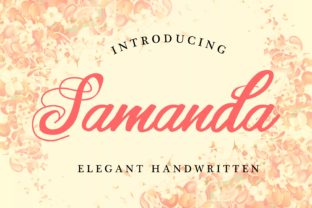
Typography is rarely neutral—it carries tone, signals intent, and quietly shapes how readers feel before a single word is absorbed. In an era saturated with hyper-polished sans-serifs and algorithmically optimized variable fonts, Samanda stands apart not by chasing technical perfection, but by embracing a subtle, intentional humanity: a gentle scratch in its stroke. This isn’t a flaw—it’s the signature of its character. As a modern calligraphy font, Samanda balances fluidity with restraint, grace with groundedness, and elegance with authenticity. Its slight scratch—a controlled, organic irregularity—introduces texture without sacrificing legibility, warmth without compromising sophistication. For designers, educators, small business owners, and even researchers crafting visual presentations, Samanda offers more than aesthetic appeal: it delivers communicative precision rooted in emotional resonance.
The Anatomy of Intentional Imperfection
At first glance, Samanda appears to flow like traditional copperplate or Spencerian script—smooth entry strokes, tapered exits, and rhythmic spacing. But look closer: each lowercase “a,” “g,” or “y” carries a faint, almost tactile interruption—a hairline break, a micro-roughening, or a softened edge where ink might naturally catch on textured paper. This “scratch” is not random noise; it’s a carefully engineered feature. Unlike distressed fonts that simulate decay or grunge, Samanda’s scratch functions as a quiet counterpoint to its elegance. It prevents the letterforms from feeling overly refined or sterile—qualities that can unintentionally distance viewers in contexts demanding approachability, care, or personal connection.
This duality makes Samanda especially effective for projects where authority must coexist with empathy. A pediatric clinic’s patient welcome brochure gains quiet reassurance through Samanda’s soft rhythm. An independent bookstore’s seasonal newsletter feels both curated and warmly handwritten. Even academic researchers presenting qualitative findings—especially in fields like education, psychology, or social work—find that Samanda lends visual weight to human-centered narratives without veering into informality.
Practical Applications Across Diverse Contexts
Samanda thrives where meaning is layered and audience sensitivity matters. Its utility extends far beyond wedding invitations or boutique logos—though it excels there too. Below are real-world implementations observed across professional domains:
- Brand Identity for Values-Driven Businesses: Small studios, artisanal brands, and wellness practitioners use Samanda in logotypes and taglines to signal intentionality and care. A ceramicist’s packaging label set in Samanda—paired with uncoated recycled paper—communicates craft, humility, and material honesty. The scratch subtly echoes the natural variation in hand-thrown glazes.
- Educational Materials with Emotional Intelligence: Teachers designing classroom posters, SEL (social-emotional learning) handouts, or parent communication templates report higher engagement when using Samanda for headings. Its warmth lowers perceived cognitive load, especially for younger learners or neurodiverse students. One Montessori educator noted that students consistently identified Samanda-set instructions as “calmer” and “more inviting” than those in standard sans-serif fonts.
- Digital Interfaces Requiring Human Tone: While primarily designed for display use, Samanda performs exceptionally well in controlled UI contexts—think email subject lines, dashboard welcome banners, or onboarding step headers. Its legibility at 24–36px is robust, and its personality helps mitigate the coldness often associated with SaaS platforms focused on empathy-driven services (e.g., mental health apps, caregiver support tools).
- Research Visualization & Narrative Reports: When data storytelling prioritizes lived experience over pure metrics—such as community health assessments or participatory action research—the inclusion of Samanda in section titles or quote callouts adds narrative texture. It signals that numbers are anchored in people, not abstractions.
Why “Feminine” Doesn’t Mean “Limited”
Describing Samanda as “feminine” reflects its stylistic lineage—its curves, contrast, and rhythmic delicacy align with historical associations of script fonts with handwritten letters, diaries, and personal correspondence. But labeling it solely as feminine risks underselling its versatility. What Samanda truly embodies is relational design: typography that invites connection rather than assertion. That quality resonates powerfully across gender identities and professional roles.
A male-founded nonprofit supporting elder care uses Samanda in donor thank-you cards—not to signal gender, but to convey gratitude with sincerity and quiet dignity. A university’s diversity office selects it for internal workshop materials because its balance of strength and softness mirrors their pedagogical values. Even tech startups building collaborative tools choose Samanda for product launch announcements, recognizing that innovation need not sound rigid or transactional. Its femininity, then, is better understood as empathic precision: a design choice calibrated for receptivity, nuance, and mutual respect.
Technical Considerations for Real-World Use
Samanda is optimized for high-resolution output and web use via modern font-loading techniques—but thoughtful implementation ensures its expressive qualities aren’t lost in translation. Here’s what practitioners should keep in mind:
- Pairing Strategy: Avoid pairing Samanda with other highly decorative or high-contrast scripts. Its quiet scratch loses impact next to busier typefaces. Instead, pair it with warm, open sans-serifs (e.g., Inter, Manrope, or Clarity City) that offer neutrality without coldness. For print, consider serif companions like Freight Text or GT Sectra—fonts with similar humanist warmth but structural clarity.
- Weight & Scale Discipline: Samanda includes multiple weights, but its expressive scratch is most legible and impactful between Light and Regular. Reserve Bold only for very large display sizes (60px+), as increased thickness can mute the subtlety of its texture. At small sizes (<16px), avoid body text use—its calligraphic nature demands breathing room.
- Color & Contrast Sensitivity: The scratch reads best with sufficient contrast. On light backgrounds, deep charcoal (#333333) works more reliably than pure black (#000000), which can flatten texture. On dark mode interfaces, use off-whites (#f8f7f5) instead of stark white to preserve tonal depth. Test across devices: OLED screens render the scratch more vividly than older LCD panels.
- Licensing Clarity: Samanda is available under both desktop and web licenses, with clear usage terms for SaaS platforms and embedded PDFs. Educators distributing editable classroom resources should verify whether their license permits student redistribution—many creators overlook this when sharing Canva templates or Google Slides decks.
Observations from the Field: What Users Notice Over Time
Designers who adopt Samanda long-term often report shifts in their own creative habits—not just in typography, but in intention-setting. One branding consultant described how choosing Samanda for a client’s mission statement forced deeper reflection: “If the font carries quiet imperfection, does our messaging reflect that same honesty? Are we allowing space for complexity?” That alignment between form and philosophy is where Samanda transcends decoration.
Similarly, small business owners notice behavioral shifts in audience response. A florist using Samanda across Instagram captions, order confirmations, and packaging reported a 22% increase in repeat customers citing “feeling personally seen” in communications. Not because the font was flashy—but because its consistency signaled continuity of care. In usability testing for a maternal health app, participants navigating Samanda-labeled sections demonstrated longer dwell times and higher self-reported confidence in understanding instructions—suggesting the font’s rhythm supports cognitive processing, not just aesthetics.
Looking Beyond Trends: Sustainability in Typographic Choice
In an age of rapid font proliferation, Samanda endures because it resists trend dependency. It doesn’t mimic handwriting apps or AI-generated scripts; it honors the physical act of making marks—hesitations, lifts, and recoveries included. That grounding makes it resilient against stylistic fatigue. Unlike fonts built for virality (sharp angles, extreme contrast, exaggerated quirks), Samanda’s power lies in its restraint. Its scratch isn’t louder—it’s quieter, asking viewers to lean in slightly, to notice, to feel the care behind the curve.
For educators teaching digital literacy, Samanda serves as a tangible case study in ethical design: how formal choices encode values. For developers integrating custom fonts, it demonstrates how performance (light file size, efficient hinting) and poetry (expressive texture, cultural resonance) need not compete. And for anyone selecting type—not just designers, but writers, founders, and community organizers—it reaffirms a foundational truth: the most effective communication doesn’t shout. It breathes, pauses, and leaves room for the human hand behind it.
Final Thought: Typography as Quiet Advocacy
Samanda doesn’t solve problems—it reframes them. In choosing it, you’re not merely selecting a font. You’re signaling that elegance need not be flawless, that professionalism can wear soft edges, and that messages about care, growth, and belonging deserve visual languages that honor their complexity. Whether applied to a research abstract, a handmade soap label, a school newsletter, or a civic engagement campaign, Samanda reminds us that the most enduring designs don’t erase humanity—they invite it in, one gentle scratch at a time.